
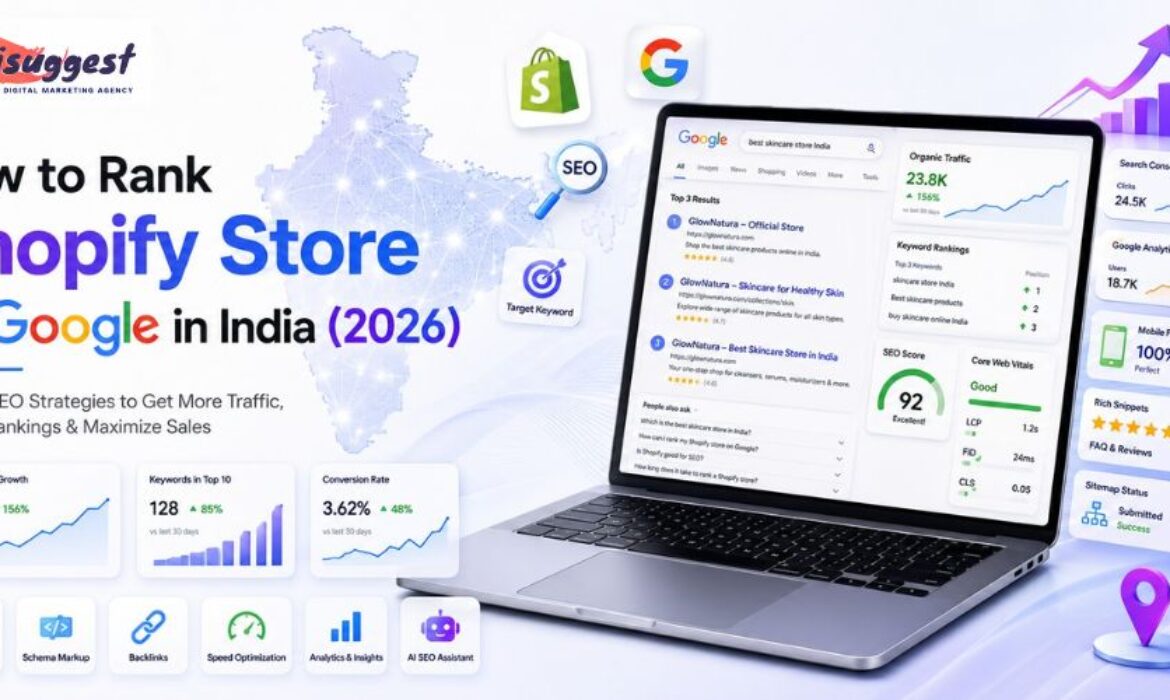
In the high-stakes world of Indian eCommerce, Search Engine Optimization (SEO) is the difference between a brand that struggles for every click and one that generates consistent organic sales while the business owner focuses on growth. If you're running your online store on Shopify, you've already chosen one of the world's most powerful eCommerce platforms—but succeeding in the Indian market requires much more than simply launching a website.
In 2026, Shopify SEO has evolved beyond optimizing for Google's traditional blue links. Today, your store must also be optimized for Generative Engine Optimization (GEO), ensuring AI-powered search platforms like Google Gemini, ChatGPT, and Perplexity can understand, trust, and recommend your products to potential customers.
From improving Core Web Vitals and fixing technical SEO issues to creating AI-friendly product content and building topical authority, every optimization contributes to higher rankings and better conversions.
As a leading Shopify Website Development Agency in Delhi India, Digi Suggest has created this comprehensive Shopify SEO Blueprint for 2026 to help Indian businesses dominate both traditional search results and the next generation of AI-powered search experiences.
- Phase 1: Technical SEO – Building a Bulletproof Foundation
- Phase 2: Localized Keyword Research – Understanding the Indian Buyer
- Phase 3: On-Page SEO Mastery
- Phase 4: Content Authority (EEAT)
- Phase 5: Off-Page SEO & Digital PR
- Phase 6: Shopify SEO Checklist for India
- Phase 7: Common Shopify SEO Mistakes to Avoid
- Why Choose Digi Suggest?
- Related Shopify Blogs
- Conclusion
- FAQs
Phase 1: Technical SEO – Building a Bulletproof Foundation
Before you optimize product descriptions, write blogs, or start building backlinks, your Shopify store must have a technically sound foundation. Think of Technical SEO as the engine of your eCommerce business—if the engine isn't performing efficiently, even the best marketing campaigns won't produce long-term results.
Google's Core Web Vitals remain one of the strongest ranking signals in 2026, while AI search engines rely heavily on clean website architecture, structured data, and crawlable content. Getting these fundamentals right is the first step toward sustainable organic growth.
1. Speed Optimization & the New INP Metric
Google has moved beyond simply measuring page load speed. In 2026, Interaction to Next Paint (INP) is a key Core Web Vital that evaluates how quickly your Shopify store responds when users interact with buttons, filters, menus, or the checkout page.
Many Shopify websites become unnecessarily slow because of excessive third-party applications, heavy scripts, oversized images, and poorly optimized themes.
- Remove unnecessary Shopify apps that don't directly contribute to sales.
- Use WebP or AVIF images instead of large PNG or JPEG files.
- Enable lazy loading for below-the-fold images.
- Minify CSS and JavaScript wherever possible.
- Reduce render-blocking resources that delay page interaction.
- Monitor Core Web Vitals monthly using Google PageSpeed Insights.
Need help improving your store's performance? Read our detailed guide on Shopify Store Speed Optimization Guide 2026 to learn advanced optimization techniques.
Want a Faster Shopify Store?
Boost Core Web Vitals, improve user experience, and increase conversions with professional Shopify speed optimization.
2. Fix Shopify's Duplicate Content Trap
One of Shopify's most common SEO challenges is duplicate product URLs. The same product can appear under multiple collections, creating different URLs that confuse search engines and dilute ranking signals.
If duplicate content isn't handled correctly, Google may struggle to identify which version should rank in search results.
- Implement proper Canonical Tags.
- Point duplicate URLs to the preferred product page.
- Avoid creating unnecessary duplicate collections.
- Audit canonical settings after every theme update.
Correct canonical implementation helps consolidate page authority and ensures Google indexes the right version of every product.
3. Optimize Your Store for AI Crawlers
Search is no longer limited to Google. AI-powered search assistants such as Google Gemini, ChatGPT, and Perplexity rely on specialized crawlers to understand websites before recommending products to users.
If your robots.txt configuration accidentally blocks these crawlers, your products may never appear in AI-generated recommendations.
- Review your robots.txt.liquid file regularly.
- Allow Google-Extended to crawl important pages.
- Do not block OAI-SearchBot.
- Ensure product pages remain crawlable.
- Monitor crawl reports through Google Search Console.
Preparing your Shopify store for AI search today gives your business a significant competitive advantage as Generative Engine Optimization (GEO) continues to become a major part of online discovery.
To build an even stronger SEO foundation, explore our Shopify SEO Services and learn more from our guide on How to Rank Your Shopify Store on Google.
Phase 2: Localized Keyword Research – Understanding the Indian Buyer
Keyword research in India is very different from targeting audiences in Western markets. Indian shoppers often search with buying intent, compare prices extensively, and frequently use conversational English mixed with local phrases. Understanding how your customers actually search is the key to attracting highly qualified organic traffic.
Instead of chasing only high-volume keywords, focus on search queries that demonstrate clear purchase intent. These keywords may generate lower traffic individually but usually deliver significantly higher conversion rates.
4. Target High-Intent "Price Point" Keywords
Indian consumers are among the world's most value-conscious buyers. Before making a purchase, they frequently compare products based on pricing, offers, and overall value for money. Optimizing your Shopify collections around these search patterns can generate highly targeted traffic.
- Create dedicated collection pages for popular price brackets.
- Include pricing naturally within collection descriptions and headings.
- Target transactional keywords that indicate purchase intent.
- Update collection pages regularly as products and prices change.
Examples of high-converting keywords include:
- Smartphones under ₹15,000
- Cotton Kurtis below ₹999
- Affordable home décor in India
- Best office chairs under ₹10,000
- Premium skincare products under ₹1,500
Dedicated landing pages targeting these keyword variations often outperform generic product category pages because they align perfectly with what customers are searching for.
5. Optimize for Hinglish & Voice Search
Voice search continues to grow rapidly across India, especially in Tier-2 and Tier-3 cities. Instead of typing short keywords, users now ask complete questions using a combination of Hindi and English.
Modern AI search engines understand conversational language much better than traditional search engines, making natural-language optimization more important than ever.
- Answer real customer questions within your content.
- Create detailed FAQ sections on product and collection pages.
- Use conversational headings throughout your blogs.
- Include long-tail keywords naturally within your content.
Instead of targeting:
Affordable skincare products
Also optimize for searches like:
- Which face wash is best for oily skin?
- Best moisturizer for Delhi weather
- Which sunscreen is suitable for Indian skin?
- Which Shopify platform is best for Indian businesses?
Answering these conversational questions increases your chances of appearing in Google's Featured Snippets, AI Overviews, and voice search results.
Need Better Shopify SEO?
We help businesses identify high-converting keywords, improve search visibility, and attract customers who are ready to buy.
Phase 3: On-Page SEO Mastery – Winning with Factual Content
Modern SEO is no longer about repeating keywords multiple times on a page. Google's AI algorithms now evaluate the depth, relevance, and factual accuracy of your content. The more useful information your product pages provide, the easier it becomes for search engines and AI platforms to recommend your products.
6. Write Generative-Ready Product Descriptions
AI-powered search engines prefer structured information that clearly explains product specifications, benefits, target users, and use cases. Instead of writing promotional copy, focus on providing information that genuinely helps customers make purchasing decisions.
Avoid writing:
"Beautiful red saree for weddings."
Instead write:
"Handwoven Banarasi silk saree featuring premium zari work, 5.5-meter length, lightweight fabric, and designed for weddings, festive occasions, and traditional celebrations across North India."
This approach gives search engines valuable information such as:
- Material
- Colour
- Length
- Occasion
- Target audience
- Product category
Well-structured product descriptions improve rankings while increasing customer confidence and reducing return rates.
7. Implement Complete Schema Markup
Schema Markup is structured data that helps Google understand exactly what appears on your pages. It also improves your chances of earning rich search results that display prices, ratings, FAQs, availability, and other valuable information directly in search results.
- Product Schema for product information.
- Review Schema for ratings and testimonials.
- FAQ Schema for common customer questions.
- Organization Schema for business information.
- Video Schema for product demonstrations.
Product videos have become one of the strongest engagement signals for eCommerce stores. Adding Video Schema increases visibility and can help your listings stand out with rich previews in search results.
To learn more about improving your Shopify rankings, read our How to Rank Your Shopify Store on Google guide and explore our professional Shopify SEO Services.
Ready to Rank Higher on Google?
Our Shopify SEO experts optimize every page for users, search engines, and AI-powered discovery platforms.
Phase 4: Content Authority (EEAT) – Becoming the Industry Expert
Google rewards businesses that consistently demonstrate Experience, Expertise, Authoritativeness, and Trustworthiness (EEAT). Publishing random blogs occasionally is no longer enough. Instead, your Shopify store should become a reliable knowledge hub that answers customer questions at every stage of the buying journey.
By creating high-quality educational content alongside your products, you establish your brand as an authority within your industry while building long-term organic traffic.
8. Build Topic Clusters Instead of Random Blogs
Rather than publishing unrelated articles, organize your content into topic clusters around your products and services. This helps search engines understand your expertise while strengthening internal linking throughout your website.
For example, if your business offers Shopify services, your content cluster could include:
- Shopify SEO Guide
- Shopify Pricing in India
- Shopify Speed Optimization
- Best Shopify Apps
- Custom Shopify Development
- Shopify Conversion Optimization
Every article should naturally link back to your primary Shopify service pages, helping distribute authority across your website.
9. Use User-Generated Content (UGC) as an SEO Asset
One of the biggest SEO advantages in 2026 is content created by your own customers. Reviews, ratings, testimonials, and user-uploaded photos constantly add fresh, relevant content to your product pages without requiring your team to write new copy.
Google increasingly considers authentic customer feedback as a trust signal. AI-powered search engines also use review content to better understand your products, customer satisfaction, and real-world use cases.
- Collect photo and video reviews from verified buyers.
- Encourage customers to describe their experience instead of leaving one-word reviews.
- Display reviews directly on product pages.
- Respond to customer reviews to build trust and engagement.
- Regularly showcase customer testimonials across your store.
For example, when a customer writes, "Perfect fit for Delhi summers and lightweight enough for daily office wear," Google gains valuable context about climate, usage, audience, and product relevance—all without you writing additional content.
Phase 5: Off-Page SEO – Building Authority Beyond Your Website
Even a perfectly optimized Shopify store needs external trust signals to compete for highly competitive keywords. Backlinks, brand mentions, Digital PR, and local business citations remain among Google's strongest ranking factors.
However, the focus has shifted from quantity to quality. A handful of authoritative backlinks from reputable websites will outperform thousands of low-quality directory links.
10. Strengthen Local SEO & Google Business Profile
Even if your Shopify business primarily operates online, Google still wants to understand your physical presence. Optimizing your Google Business Profile improves visibility in Google's Local Pack and builds trust among nearby customers.
- Claim and verify your Google Business Profile.
- Maintain consistent Name, Address and Phone Number (NAP) across every platform.
- Upload fresh business photos regularly.
- Publish weekly Google Business updates.
- Respond professionally to every customer review.
A well-maintained Business Profile increases local visibility while supporting your overall SEO strategy.
11. Build High-Quality Backlinks through Digital PR
Backlinks continue to act as votes of confidence for your website. Rather than chasing hundreds of low-quality links, focus on earning mentions from trusted publications, industry websites, and reputable blogs.
- Publish original research and case studies.
- Contribute guest articles to authoritative websites.
- Collaborate with industry experts and creators.
- Launch Digital PR campaigns.
- Earn mentions from Indian business publications.
Google also recognizes unlinked brand mentions across trusted platforms. Consistent visibility on blogs, social media, news websites, and industry discussions strengthens your overall online authority.
Need Complete Shopify SEO?
From technical SEO and content strategy to Digital PR and AI optimization, our experts help Shopify stores achieve sustainable organic growth.
Phase 6: Shopify SEO Checklist for India (2026)
| Priority | SEO Task | Frequency |
|---|---|---|
| Critical | Optimize Core Web Vitals (LCP & INP) | Monthly |
| Critical | Update Meta Titles & Meta Descriptions | Weekly |
| High | Implement FAQ Schema | Every Product Page |
| High | Fix Broken Links & 404 Errors | Monthly |
| Medium | Publish Topic Cluster Blogs | Weekly |
| Medium | Respond to Google Reviews | Daily |
Phase 7: Common Shopify SEO Mistakes to Avoid
Many Shopify stores fail to achieve their organic growth potential because of a few common mistakes that can easily be prevented.
- Deleting Out-of-Stock Product Pages
Never delete products that have already earned rankings. Instead, keep the page live, display related products, and offer a "Notify Me" option. - Ignoring Image SEO
Replace generic filenames like IMG_001.jpg with descriptive names such as blue-cotton-kurta-men.webp and always write meaningful ALT text. - Not Monitoring Google Search Console
Review Search Console every week to identify indexing issues, keyword opportunities, and pages losing visibility.
Why Choose Digi Suggest?
At Digi Suggest, we combine Technical SEO, Shopify Development, Content Strategy, AI Optimization, and Digital PR into one comprehensive growth strategy. Rather than chasing short-term rankings, we build Shopify stores designed for sustainable organic growth.
Our Shopify SEO services include:
- Complete Technical SEO Audits
- Core Web Vitals Optimization
- AI & GEO Optimization
- Shopify Speed Optimization
- Schema Markup Implementation
- Product & Collection SEO
- Content Marketing & Topic Clusters
- Internal Linking Strategy
- Digital PR & Authority Building
- Monthly SEO Reporting
Related Shopify Blogs
- Shopify Store Speed Optimization Guide 2026
- How to Rank Your Shopify Store on Google
- Custom vs Theme-Based Shopify Development in India
- Shopify Pricing Plans in India
- Complete Shopify Store Setup Guide
- Shopify Website Development Cost in India
- Why Mobile-First Design Matters
- eCommerce Conversion Rate Optimization Guide
Conclusion: SEO is a Business Investment, Not a Shortcut
Ranking a Shopify store on Google in 2026 isn't about manipulating algorithms—it's about creating the fastest, most helpful, and most trustworthy shopping experience possible. Search engines and AI platforms reward businesses that consistently provide valuable information, exceptional user experiences, and technically optimized websites.
By combining Technical SEO, localized keyword research, structured data, authoritative content, Digital PR, and continuous optimization, your Shopify store can generate sustainable organic traffic and long-term revenue without relying entirely on paid advertising.
At Digi Suggest, we don't simply optimize websites—we build Shopify growth engines that help businesses dominate both traditional search results and the future of AI-powered discovery.
Ready to take your Shopify store to Page One? Let our experts handle the technical complexities while you focus on growing your business.
FAQs
Not at all. The price you pay for Shopify doesn’t change how Google sees you. However, use those 3 months to build high-quality content so that by the time you pay full price, you are already getting free traffic!
In 2026, you must do both. Fortunately, the “Rules” are similar: Fast site, structured data (Schema), and factual content. If you optimize for Google’s AI Overviews, you are automatically optimizing for ChatGPT.
Yes, but don’t just “Copy-Paste.” Use AI to generate the base, then add “Human Experience.” Mention how the product feels, how it fits an Indian body type, or why it’s perfect for a Delhi summer. Google loves “Human-Plus-AI” content.
There is no fixed number. In a low-competition niche, 5 high-quality links might be enough. In a high-competition niche (like Fashion), you need a consistent monthly flow of links to stay ahead.
We recommend Avada SEO or Plug in SEO. But remember, an app can only fix the “technical” part. The “content” and “authority” parts must come from your strategy and your partner agency, Digi Suggest.


