Discover how coaching institutes can get more student admissions with Facebook, Instagram and YouTube Marketing. Digi Suggest provides deep insights on social media marketing.
India’s coaching industry is one of the most competitive education markets in the world. In every major city Delhi, Mumbai, Bengaluru, Patna you will find hundreds of institutes fighting to attract NEET, JEE, UPSC, and SSC aspirants. With so many options available, parents and students often feel overwhelmed when choosing the right coaching center.
Traditional marketing methods like pamphlets, hoardings, and newspaper ads are expensive, outdated, and difficult to track. They no longer guarantee admissions in today’s digital-first world.
Instead, the real battlefield has shifted online especially to social media. Today’s students (and their parents) spend hours every day on platforms like Facebook, Instagram, YouTube, and LinkedIn. The coaching institutes that know how to use these platforms strategically are the ones that stand out, gain trust, and fill their batches faster.
In this blog, Digi Suggest walks you through step-by-step strategies to leverage social media marketing for coaching institutes, so you can generate more student inquiries and grow admissions consistently.
Why Social Media Marketing is Important for Coaching Institutes
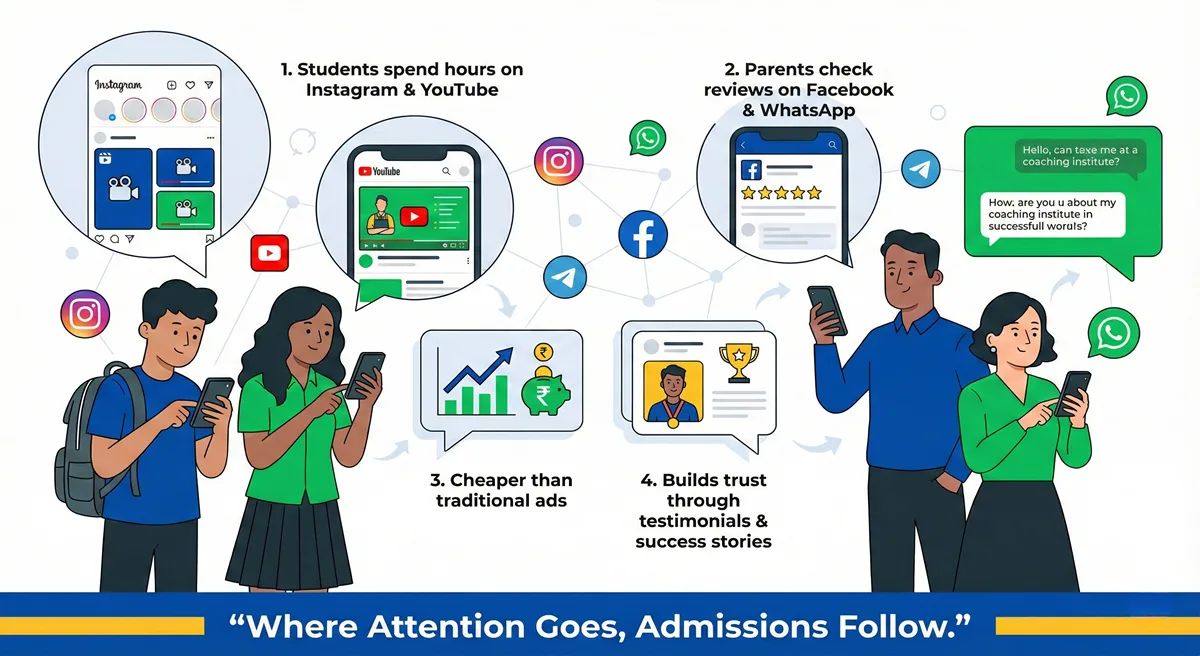
- Students Are Already There → Most students preparing for exams spend hours daily on Instagram, YouTube, or Telegram groups.
- Parents Use Social Media Too → Especially on Facebook & WhatsApp for reviews and recommendations.
- Cheaper than Traditional Ads → You can reach thousands with a few thousand rupees.
- Trust Building → Videos, success stories, and testimonials on social media build credibility faster than text ads.
In short: Social media is where attention is. And where attention goes, admissions follow.
Platforms Coaching Institutes Should Focus On
1️⃣ Facebook – Parent-Focused Visibility & Inquiries
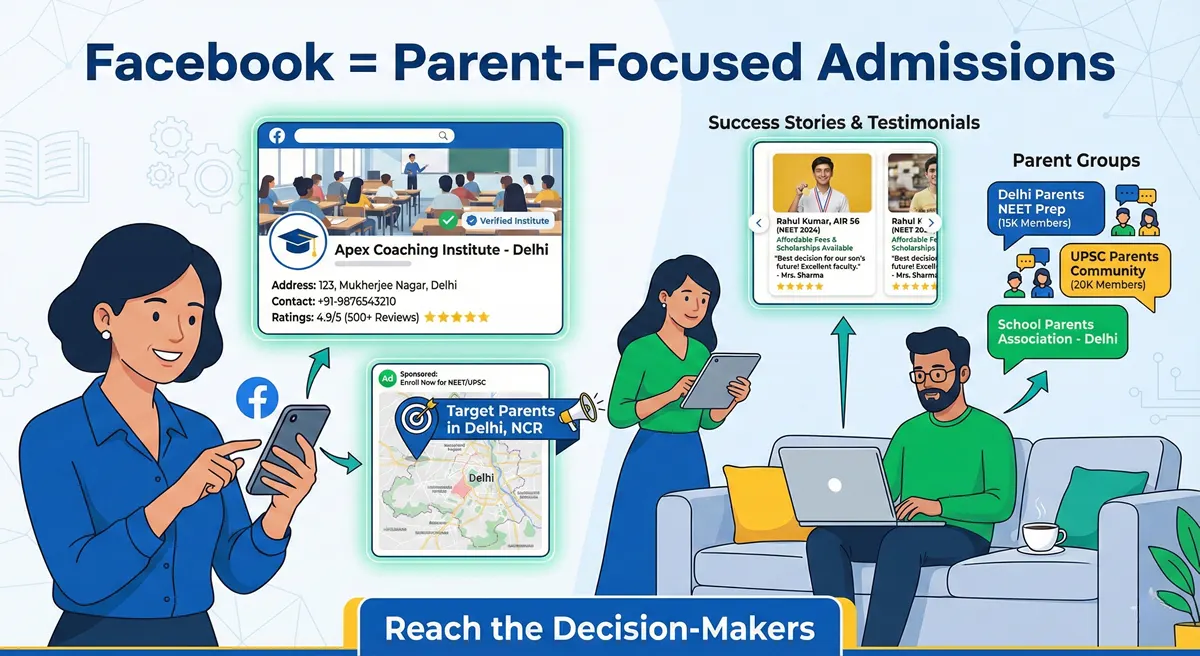
Facebook is still the most effective platform to reach parents, who are the ultimate decision-makers when it comes to admissions.
How to use Facebook effectively:
- Create a professional Facebook Page with updated address, contact details, and reviews.
- Run location-based ads targeting parents in your city or nearby areas (see our meta ads services).
- Share success stories, testimonials, fee structures, and event photos regularly.
- Engage directly in local parenting groups (like “Delhi Parents NEET Prep” or “UPSC Aspirants’ Parents Community”).
Example: A NEET coaching institute in Laxmi Nagar invested ₹10,000/month in Facebook Ads and received 250+ inquiries within 30 days. (For official ad guidance see Facebook Business Ads.)
2️⃣ Instagram – Student Engagement Hub
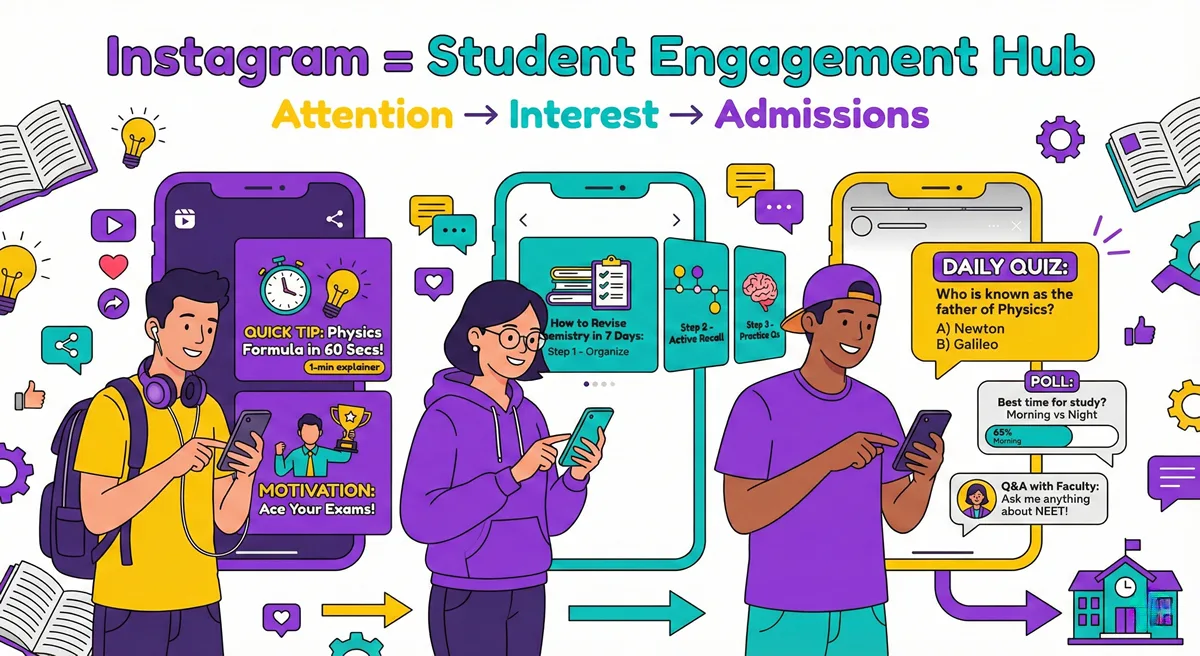
Instagram is where students spend the maximum time daily. It is perfect for building student engagement and brand awareness.
Content Ideas for Coaching Institutes:
- Reels: Share quick subject tips, motivational hacks, or 1-minute explainer videos.
- Carousels: Step-by-step prep strategies (e.g., “How to Revise Chemistry in 7 Days”).
- Stories & Polls: Daily quizzes, motivational polls, or Q&A sessions with faculty.
Example: An UPSC coaching center in Mukherjee Nagar started posting a daily “1 Question Quiz” reel. Within 6 months, they grew to 15,000 followers and tripled inquiries from Instagram.
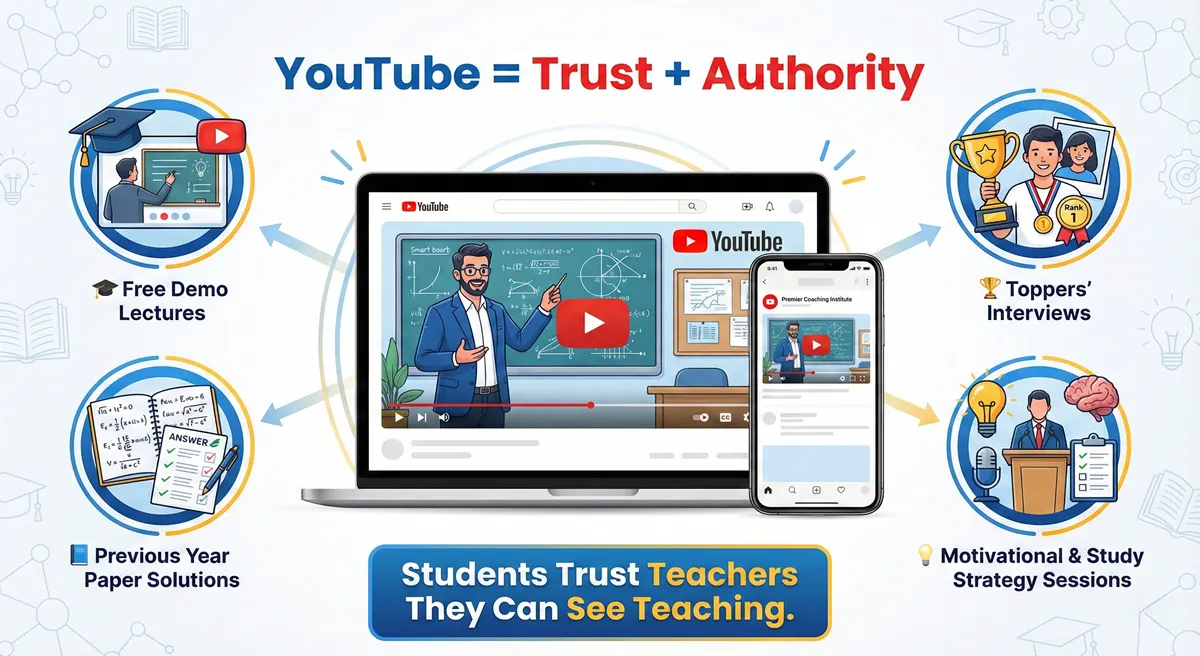
3️⃣ YouTube – Long-Form Trust & Authority Builder
YouTube is the #1 education platform in India. Parents and students trust teachers they see teaching online. It creates an instant bond.
Content Ideas for Coaching Institutes:
- Free demo lectures (sample of your teaching style).
- Previous year paper solutions explained by faculty.
- Toppers’ interviews & preparation journeys.
- Motivational talks and study strategy sessions.
Example: Allen Career Institute’s YouTube channel has millions of views and acts as a national credibility booster.
Even smaller, local institutes can replicate this by uploading region-focused content (like “NEET Strategy for Delhi Students”). For creator resources see YouTube Creator Academy.
4️⃣ LinkedIn – Professional Branding & UPSC/SSC Audience
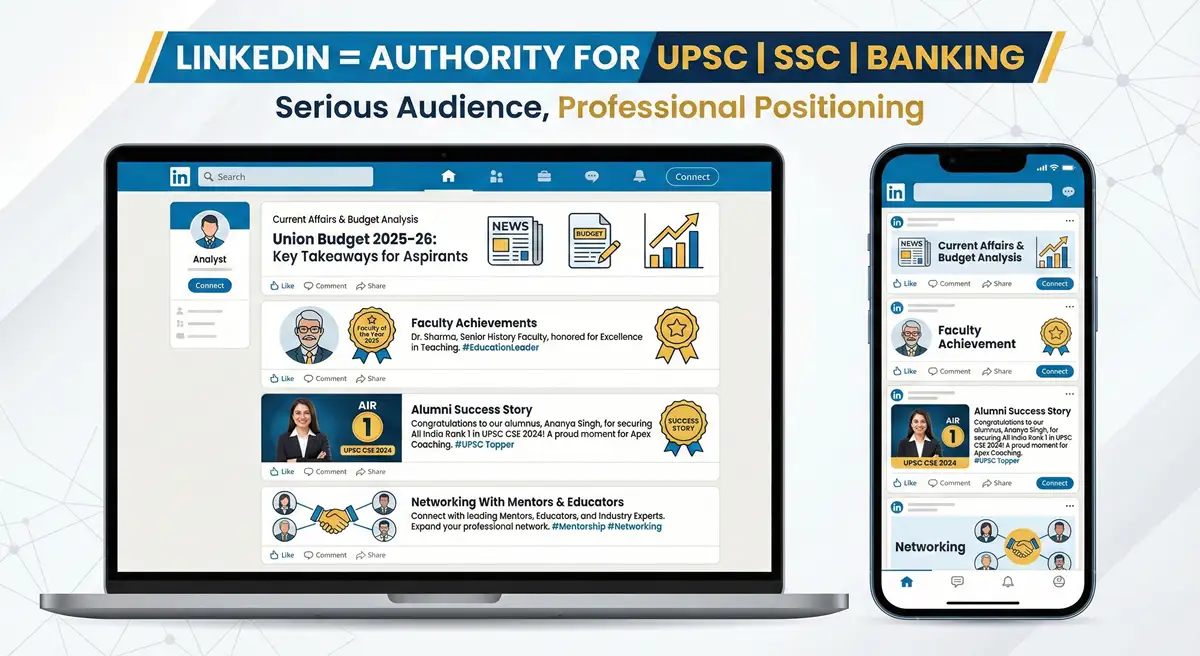
LinkedIn is underrated but powerful, especially for UPSC, SSC, Banking, and professional courses. It positions your institute as an authority in serious exam preparation.
How coaching institutes can use LinkedIn:
- Share articles and posts on current affairs, budget analysis, and exam trends.
- Highlight faculty achievements and institute milestones.
- Post alumni success stories to inspire and attract aspirants.
- Network with education bloggers, career counselors, and UPSC mentors.
Example: A Delhi-based UPSC coaching posted weekly analysis of the “Union Budget 2025 for UPSC Prep” on LinkedIn. With backlinks to demo classes, they generated high-quality UPSC aspirant leads without running ads.
Need a Social Media Plan that Converts?
We design platform-specific strategies for coaching institutes.
Step-by-Step Social Media Strategy for Coaching Institutes
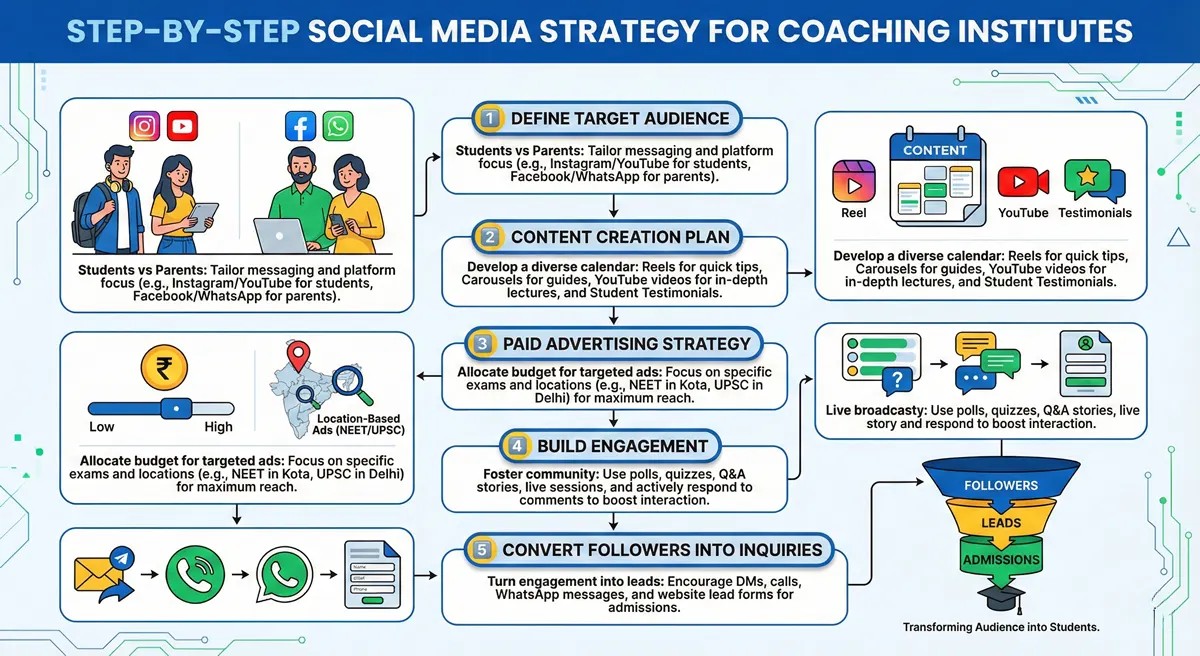
Step 1: Define Your Target Audience
- NEET/JEE → Students (16–20 yrs) + Parents (35–50 yrs) → Instagram + Facebook
- UPSC/SSC → College students & working professionals → LinkedIn + YouTube
- Foundation Classes (9th–10th) → Parents → Facebook + WhatsApp
Step 2: Content Creation Plan
- Educational: Tips, quizzes, syllabus updates
- Trust-Building: Testimonials, student results, behind-the-scenes
- Promotional: Batch launch, fee offers, demo class invites
Mix ratio: 70% Educational + 20% Trust + 10% Promotion
Step 3: Paid Advertising Strategy
- Facebook & Instagram Ads → Target local parents/students by age, location, interests.
- YouTube Ads → Run in-stream ads before study-related videos.
- Retargeting Ads → Show reminders to those who visited your website but didn’t inquire.
Step 4: Build Engagement
- Reply to comments & DMs quickly.
- Use WhatsApp/Telegram groups for closer student-parent interaction.
- Run contests like “Win Free Mock Test” to boost participation.
Step 5: Convert Followers into Inquiries
- Always add CTAs like “Call Now,” “Book Demo,” “Download Fee Structure.”
- Use landing pages linked from ads for lead capture.
- Collect emails & phone numbers for remarketing.
Convert Followers to Students
We create landing pages & lead funnels tailored for coaching institutes.
Case Study: Coaching Center Using Social Media to Fill Batches
A JEE coaching in Hyderabad used a combined strategy:
- Posted daily reels with physics tips on Instagram.
- Uploaded free demo lectures on YouTube.
- Ran Facebook ads targeting parents near Hyderabad colleges.
Results in 3 months:
- Instagram followers: 500 → 8,000
- YouTube views: 1.2M+
- Monthly inquiries: 50 → 220
- Admissions: Doubled in 1 batch cycle
Ready to Scale Your Social Media?
We manage content, ads, and engagement for coaching institutes.
🚫 Common Social Media Mistakes Coaching Institutes Make
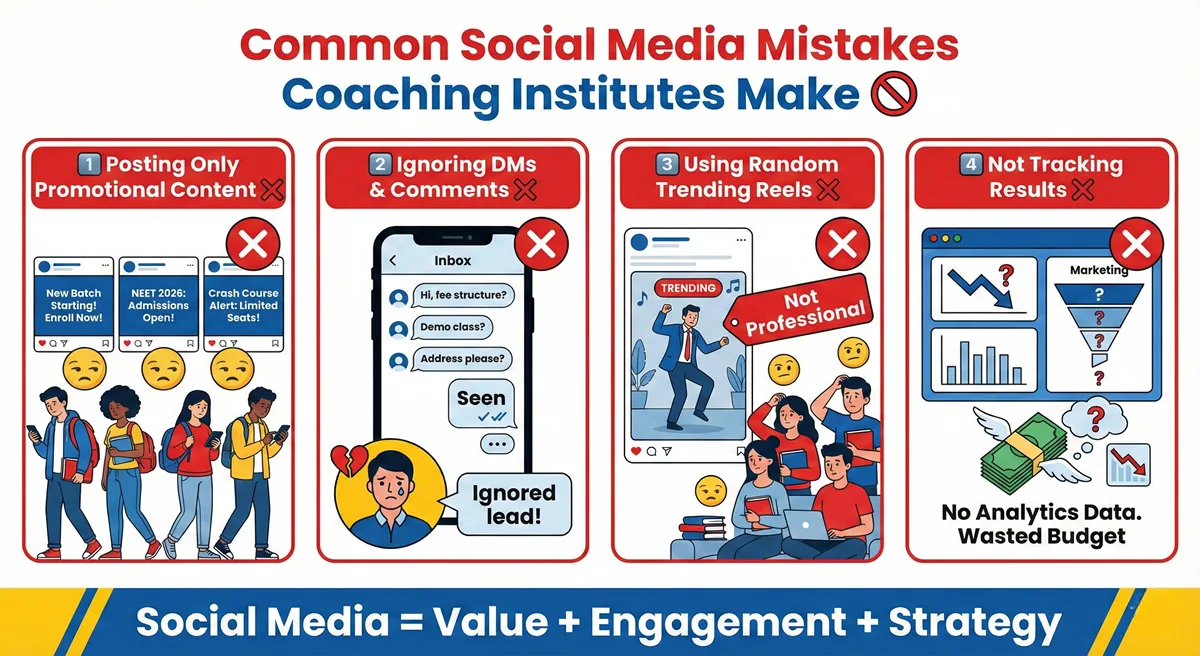
Even though social media is powerful, many coaching institutes fail to use it effectively because of these mistakes:
If every post is about “New Batch Starting” or “Join Now,” students quickly lose interest. Social media is meant for value + engagement, not just advertising.
Parents and students often ask about fees, batch timings, or demo classes in comments and direct messages. Ignoring them means losing hot inquiries that could have converted into admissions.
Jumping on irrelevant trends (dance, unrelated memes) makes the institute look unprofessional. Content must stay aligned with education, motivation, and exam prep.
Many institutes run ads or post content but never track results. Without measuring leads, conversions, and ROI, you end up wasting money and effort.
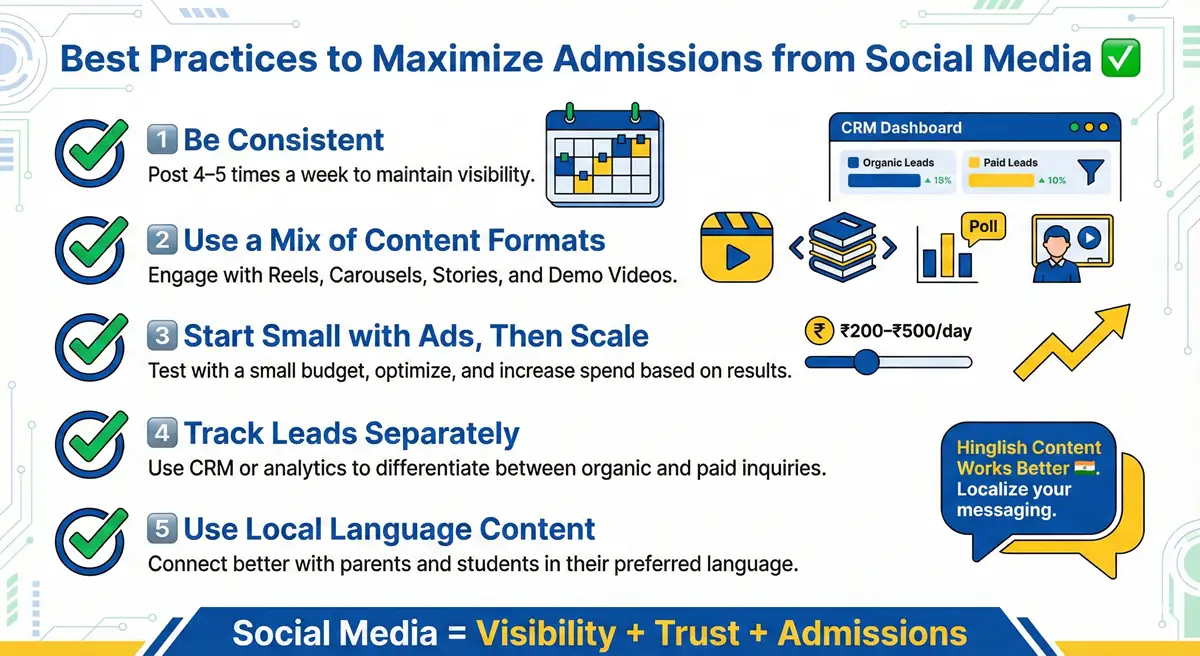
✅ Best Practices to Maximize Admissions from Social Media
If used properly, social media can become a 24/7 admission engine for your coaching center. Here’s how:
Aim to post at least 4–5 times a week. Consistency builds trust and ensures you stay visible in student and parent feeds.
Balance your content between:
- Reels (quick exam tips, motivational hacks)
- Carousel Posts (step-by-step strategies, study schedules)
- Stories/Polls (daily quizzes, interactive engagement)
- Videos (demo classes, toppers’ interviews)
This variety keeps both students and parents engaged.
Run low-budget ad campaigns (₹200–₹500/day) to test which creatives and audiences work best. Once you find a winning formula, increase the budget to maximize inquiries.
Always track how many inquiries are coming from organic posts vs paid ads. This helps in budgeting better and identifying which platform works best for your institute.
In India, Hindi + English (Hinglish) content works best. Students relate more to reels and posts in their own language, which increases shares and conversions.
Conclusion
For coaching institutes, social media is not just about likes and shares - it’s about building trust and generating real student inquiries.
• Facebook = Parents + Ads
• Instagram = Students + Engagement
• YouTube = Long-term credibility
• LinkedIn = UPSC/Professional audience
By creating engaging content, running smart ad campaigns, and combining social + SEO + PPC, your coaching institute can turn social media into a 24/7 admission machine.
Need help creating a social media strategy that works for your coaching center?
Contact DigiSuggest today for a free consultation.
Need a Social Media Strategy for Admissions?
Book a free consultation with our experts.