Best On-Page SEO Practices for Coaching Websites in 2025
Running a coaching institute in 2025 without a strong online presence is like teaching in an empty classroom. Even if you have the best faculty and infrastructure, if parents and students cannot find your coaching website on Google, you will lose out to competitors.
That is where On-Page SEO comes in. On-Page SEO means optimizing the content and structure of your website so search engines (like Google) and users (students/parents) can easily understand and trust it. Unlike off-page SEO (backlinks, PR, directories), on-page SEO is 100% in your control.
In this blog, Digi Suggest breaks down the best On-Page SEO practices for coaching websites with practical examples that can help your institute attract more student inquiries and boost admissions.
Table of Contents
Why On-Page SEO Matters for Coaching Institutes
1. Direct Visibility on Google
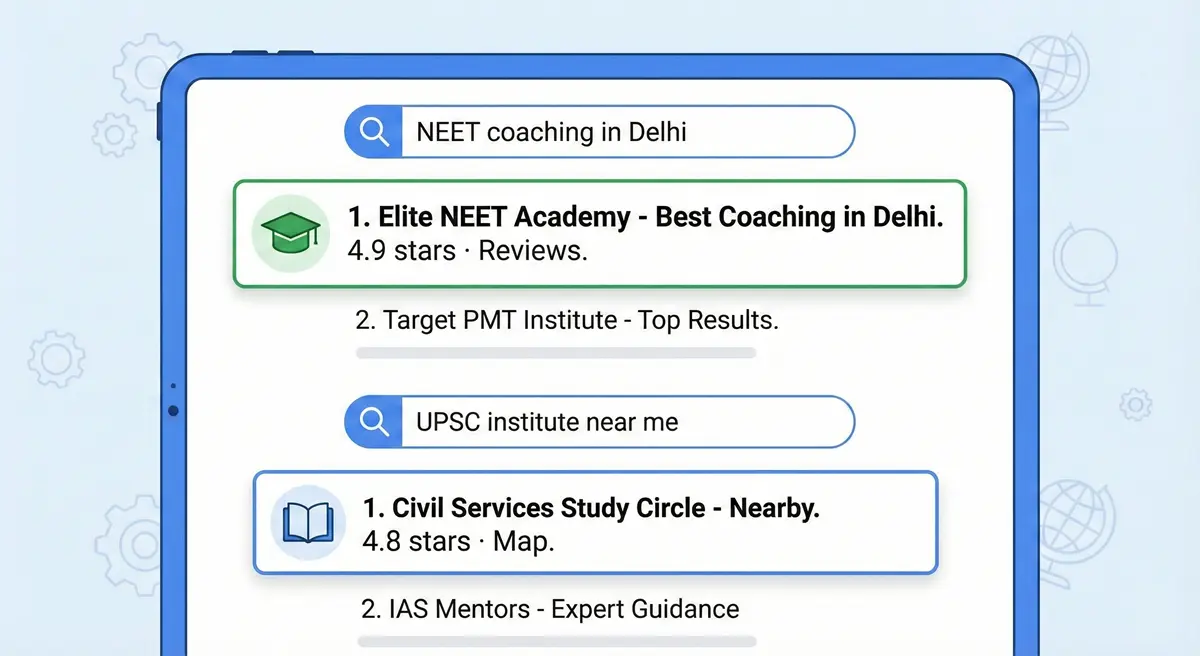
Most parents and students don’t go past the first page of Google when searching for coaching institutes. They usually type queries like “NEET coaching in Delhi”, “JEE crash course near me”, or “UPSC institute in Mukherjee Nagar.”
If your coaching website doesn’t have proper on-page optimization like location-based keywords, optimized titles, and clear headings—it won’t even appear in those search results. This means you are invisible to potential students, even though they are actively searching for what you offer. On-page SEO ensures your website shows up in the right searches at the right time.
2. Better User Experience
SEO isn’t just about pleasing Google. It is also about creating a smooth, helpful experience for parents and students. An optimized website:
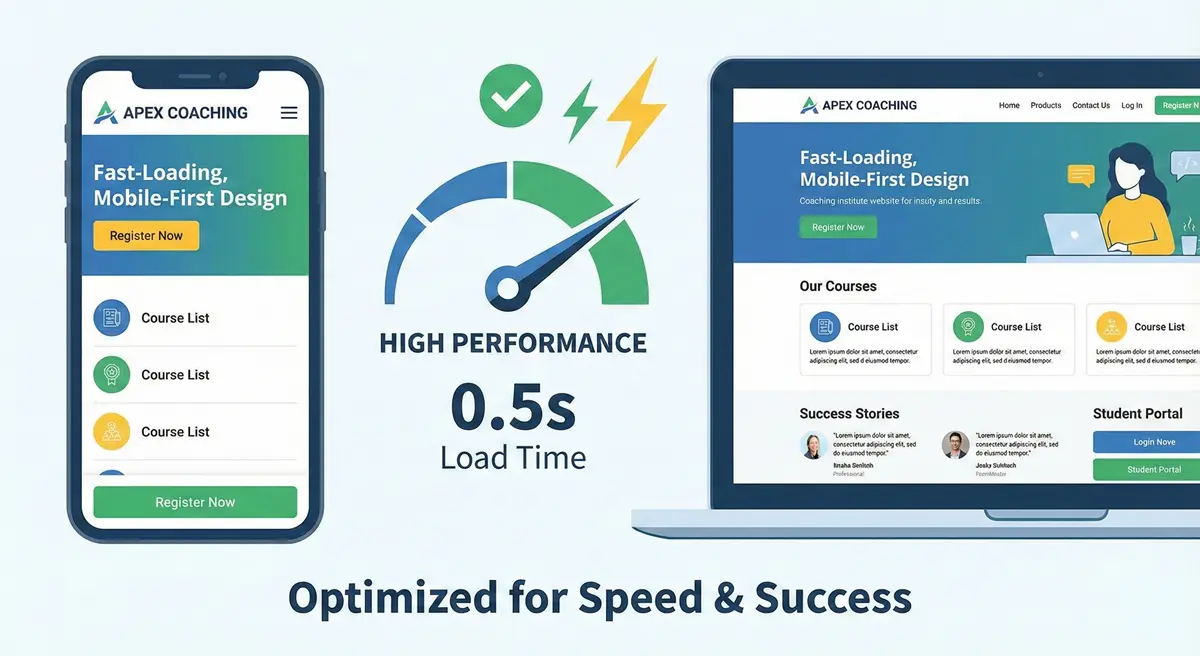
- Loads faster - nobody waits more than 3–4 seconds for a site to open. (Check speed with Google PageSpeed Insights.)
- Looks better on mobile - over 70% of searches are done from smartphones.
- Answers queries instantly - well-structured pages with headings, FAQs, and course details help parents find what they need without confusion.
When visitors find a site easy to navigate, they spend more time exploring courses and are more likely to contact you.
3. Higher Conversions
Getting traffic is one thing, but turning visitors into paying students is the real goal. On-page SEO helps here too.
- Clear CTAs (Call-to-Action): Buttons like “Book Free Demo”, “Download Fee Structure”, or “Call Now” guide visitors to take action.
- Course details: Dedicated pages for NEET, JEE, UPSC, and SSC with structured content make parents feel informed and confident.
- Trust signals: Testimonials, success stories, and FAQ sections add credibility.
Together, these elements mean your website doesn’t just attract visitors—it converts them into actual student inquiries.

Want to Optimize Your Coaching Website for SEO? Contact Digi Suggest – India’s Leading Coaching Marketing Agency
Best On-Page SEO Practices for Coaching Websites
1. Optimize Title Tags & Meta Descriptions
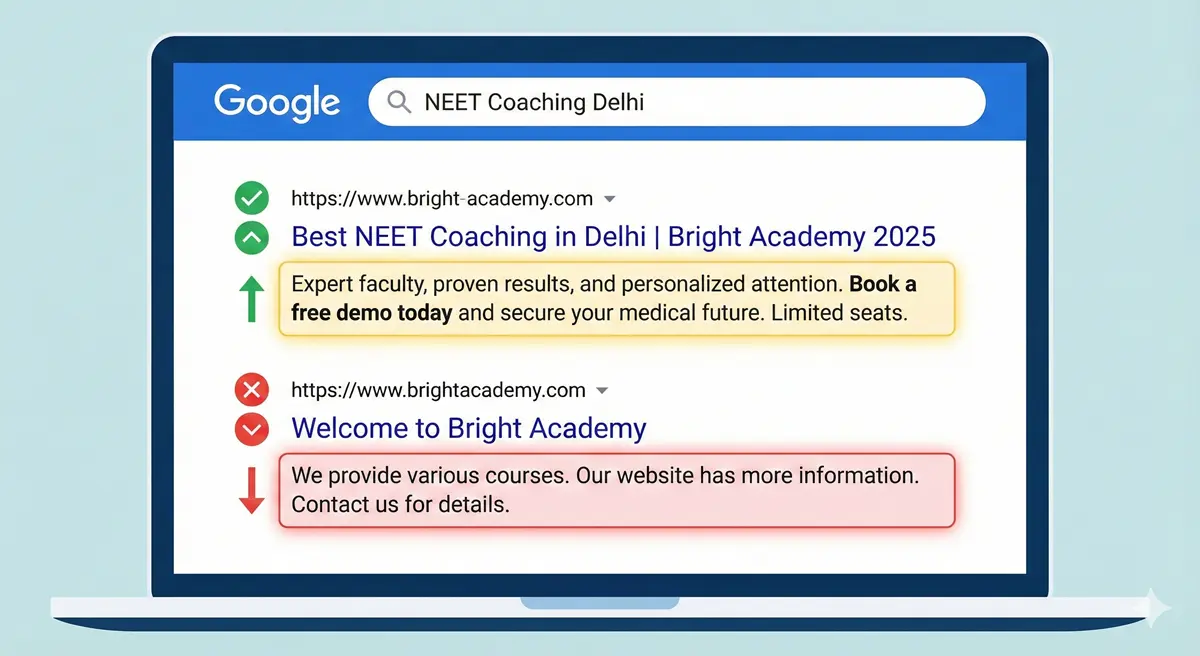
Your title tag is like the headline of your institute on Google. It should be keyword-rich, clear, and clickable.
Example:
- ❌ Bad: “Welcome to Bright Academy”
- ✅ Good: “Best NEET Coaching in Delhi | Bright Academy 2025”
Meta Description Example:
“Join Bright Academy, Delhi’s top NEET coaching institute. Expert faculty, proven results, and affordable fees. Book a free demo today.”
2. Use Proper Heading Tags (H1, H2, H3)
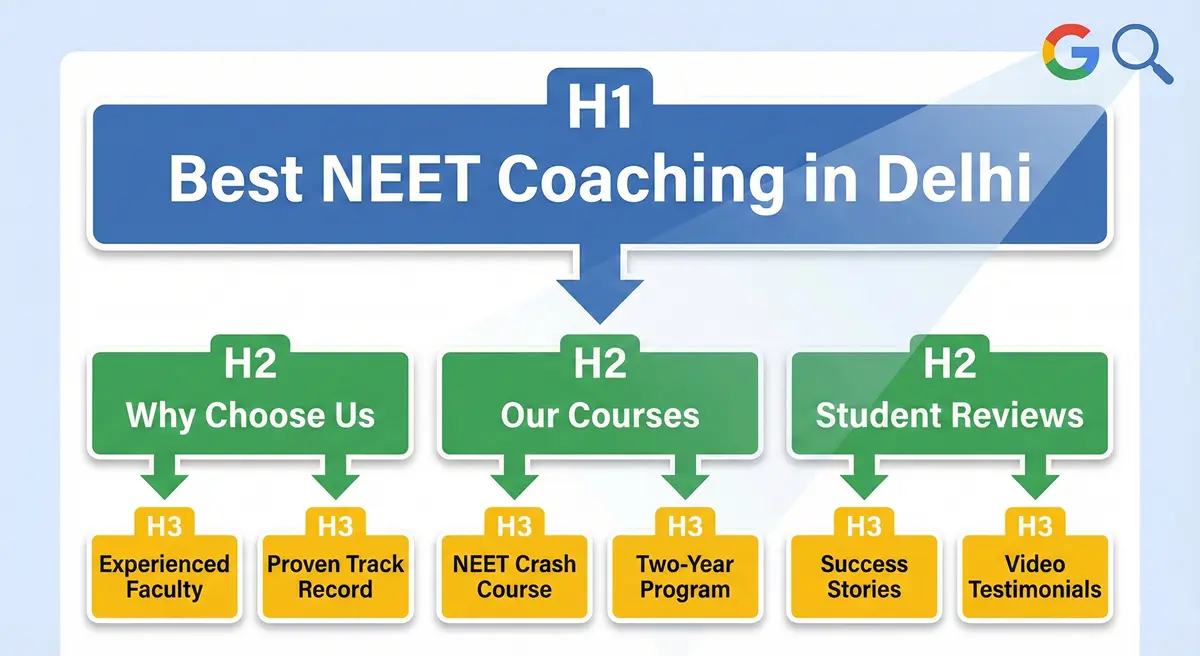
Google reads your headings to understand what your page is about.
- H1: Main page title (e.g., Best NEET Coaching in Delhi)
- H2: Subtopics (e.g., Why Choose Us, Our Courses, Student Reviews)
- H3: Smaller details (e.g., Batch Timings, Fee Structure)
Every course page (NEET, JEE, UPSC, SSC) should have one clear H1 and well-structured subheadings.
3. Keyword Optimization (Without Stuffing)
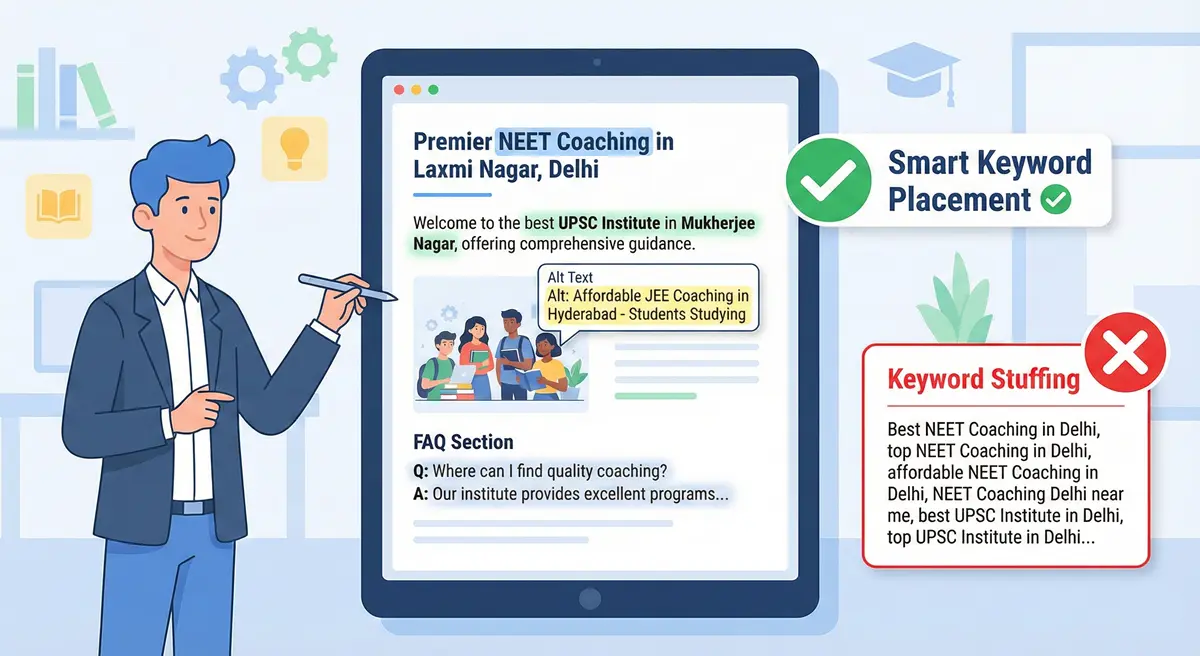
Parents don’t just search “coaching classes.” They also search location + course.
Example Keywords:- Best NEET coaching in Laxmi Nagar Delhi
- UPSC institute in Mukherjee Nagar
- Affordable JEE coaching in Hyderabad
Pro Tip: Use keywords in the first 100 words, headings, image alt text, and FAQs.
4. Create Dedicated Pages for Each Course
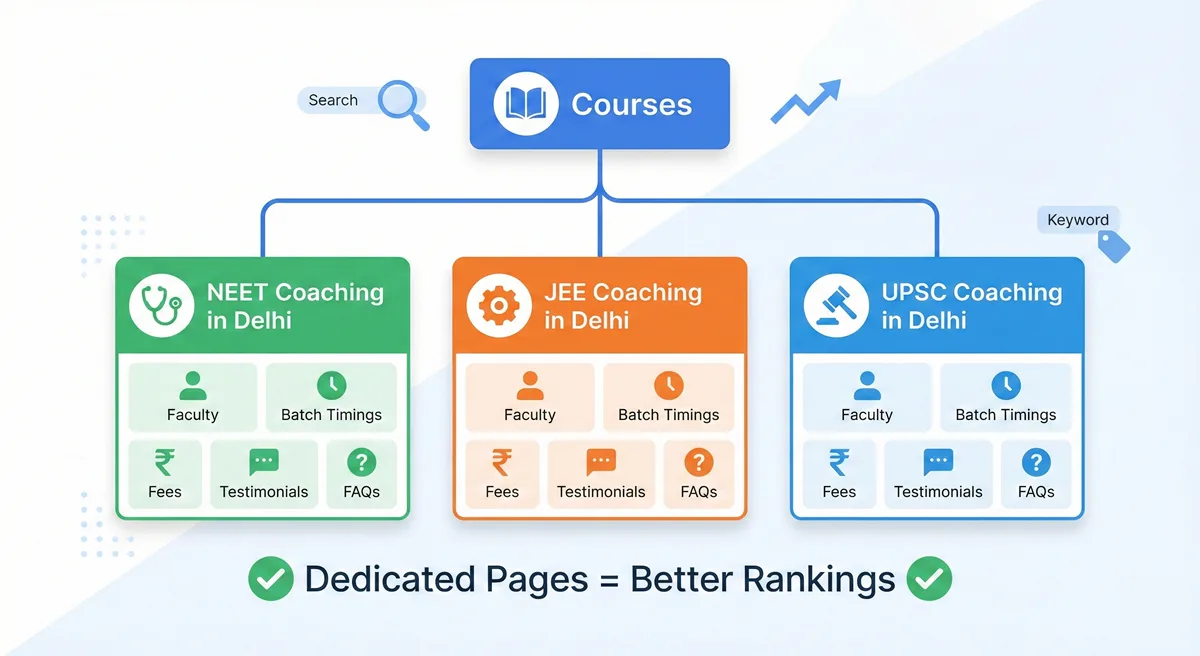
Instead of one generic “Courses” page, make separate, keyword-rich pages:
- /neet-coaching-delhi/ (example: dedicated course pages - see our education industry services)
- /jee-coaching-delhi/ (example content ideas)
- /upsc-coaching-delhi/ (example: keyword pages)
Each page should include:
- Course overview
- Faculty details
- Batch timings & fees
- Testimonials & success stories
- FAQs (with schema)
5. Add FAQ Sections with Schema
Parents have endless questions: “What’s the fee?”, “Do you have hostel facility?”, “What’s your success rate?”
By adding an FAQ section + schema markup (see FAQPage schema), your coaching site can appear in Google’s “People Also Ask” box.
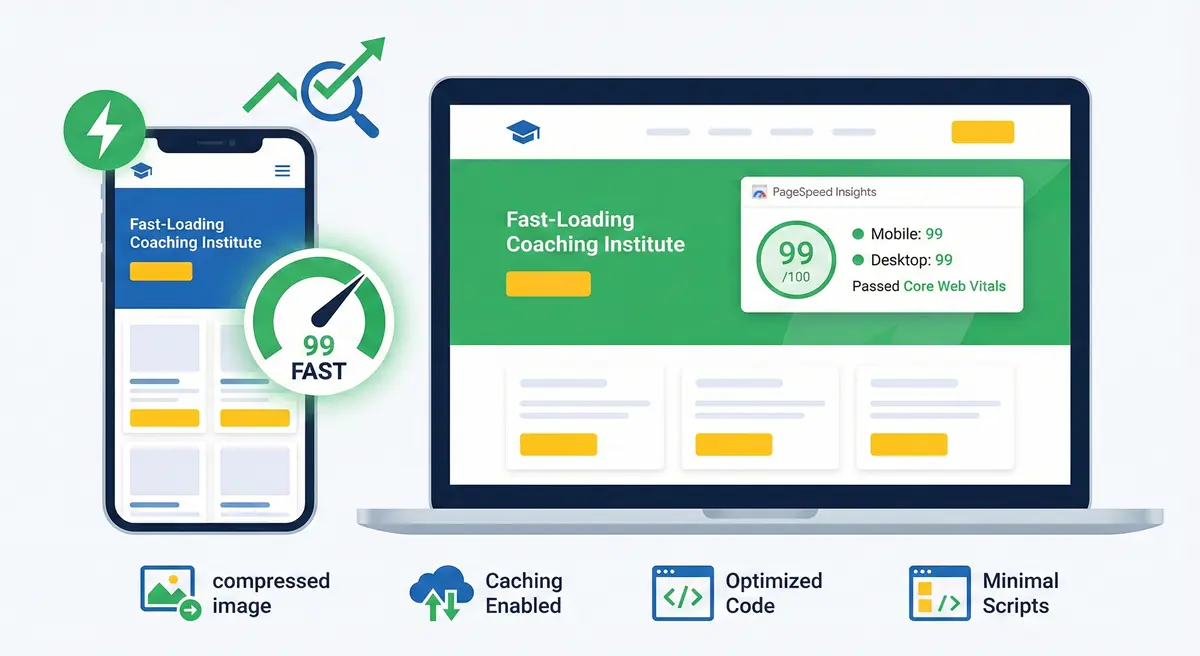
6. Optimize Website Speed & Mobile Experience
- Most students search on mobile, so your website must load under 3 seconds.
- Use tools like PageSpeed Insights to fix speed issues.
- Compress images, use caching plugins, and enable mobile-friendly design.
7. Internal Linking for Content Clusters
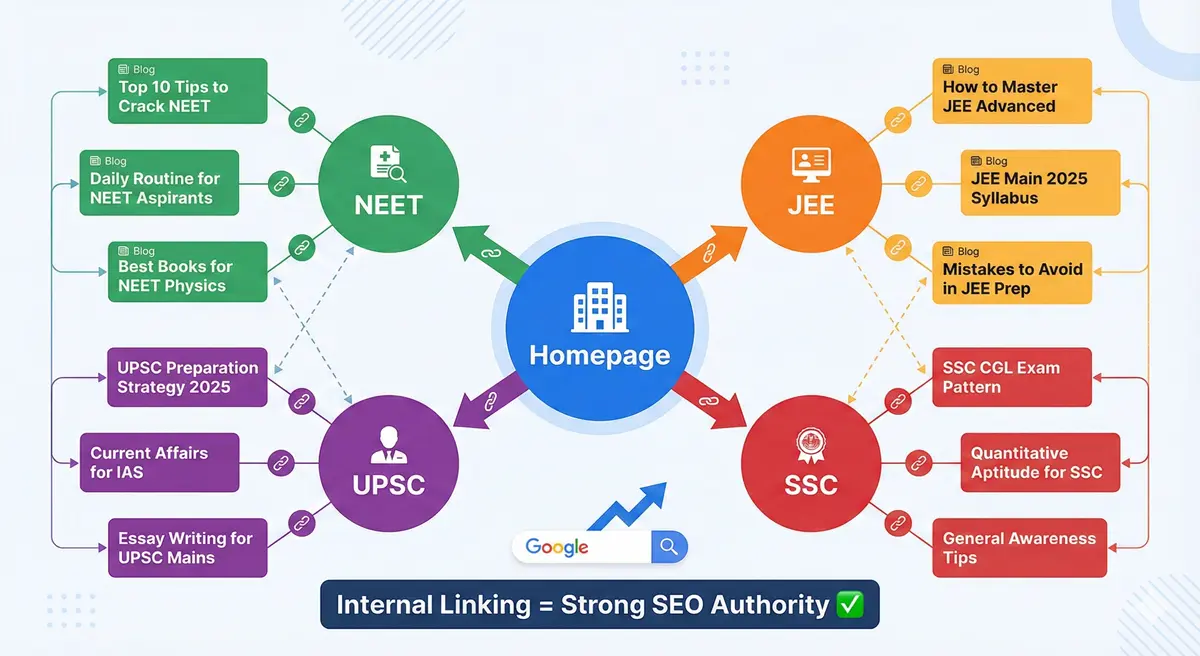
Internal linking means connecting your important pages and blogs with each other. This helps Google understand your website hierarchy and passes SEO authority between pages.
Example:- NEET Coaching page → “Top 10 Tips to Crack NEET in First Attempt” blog.
- UPSC Coaching page → “Best UPSC Preparation Strategy 2025.”
- Homepage → NEET, JEE, UPSC, SSC course pages.
- Between blogs → Interlink related ones like “Best Daily Routine for NEET Aspirants” (example).
8. Add Call-to-Actions (CTAs) at Key Places
- Buttons: “Book Free Demo Class”, “Download Fee Structure PDF”, “Talk to Academic Counselor on WhatsApp.”
- Place CTAs at: end of blog, sidebar, top header.
Boost Your Coaching Leads with Smart SEO
Let Digi Suggest Help You Rank Higher and Convert Better
9. Use Images, Videos & Alt Text
Parents trust coaching websites more if they see real photos and videos.
- Add classroom photos, topper interviews, faculty profiles.
- Upload demo class videos (YouTube + embed).
- Add descriptive alt text like “NEET coaching classroom in Delhi – Bright Academy.”
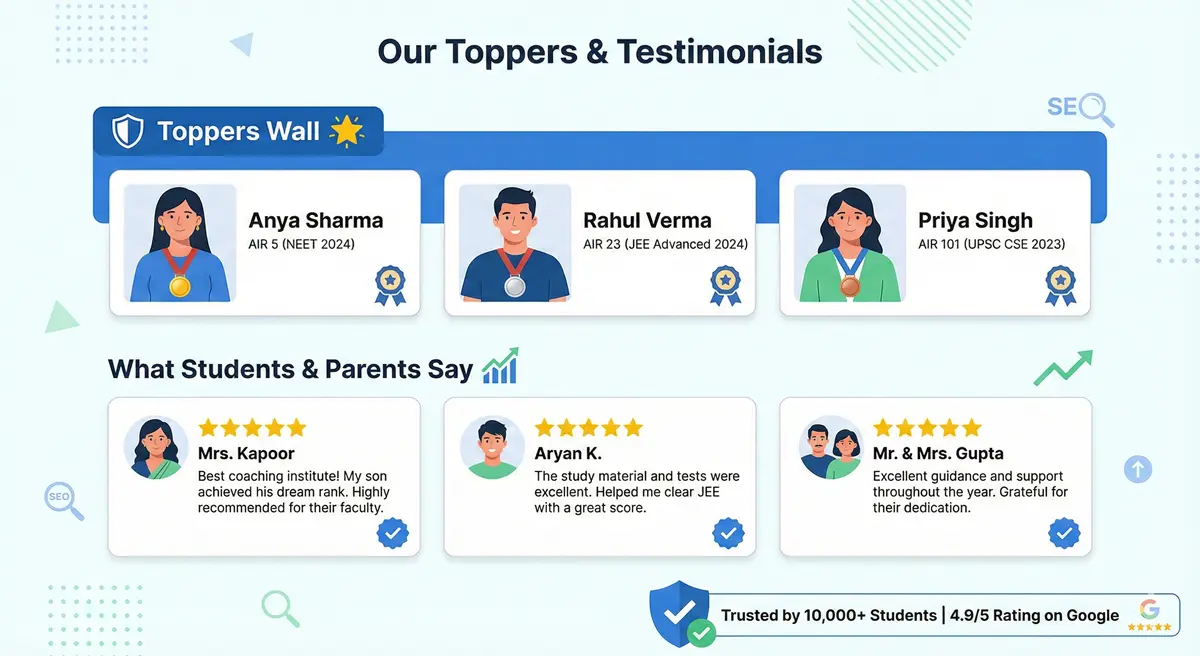
10. Add Testimonials & Success Stories
Showcase your toppers, ranks, and parent/student reviews. Google recognizes these as trust signals.
Bonus: Technical On-Page SEO for Coaching Sites
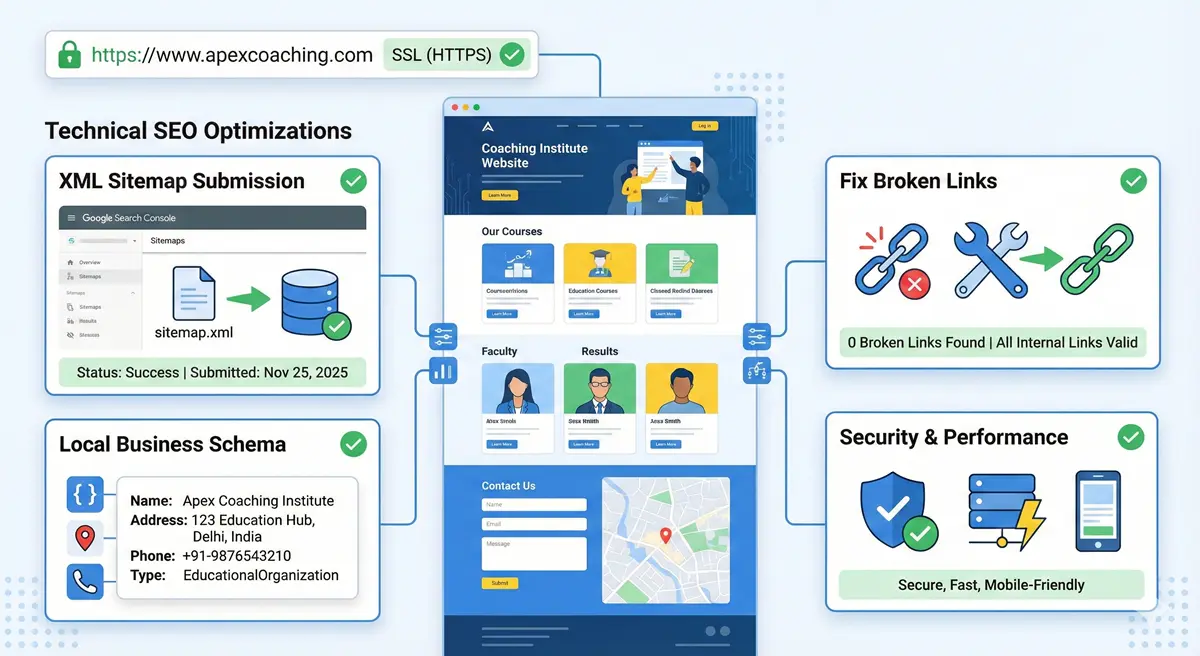
- Use SSL (https)
- Submit XML sitemap to Google Search Console
- Fix broken links & redirects
- Implement local business schema (Name, Address, Phone)
Case Study: On-Page SEO Success
A coaching website in Delhi optimized its titles, added location keywords, and improved page speed.
- Before: Ranked on page 3 for “NEET coaching in Delhi.”
- After 3 months: Page 1, position 4.
- Leads: Increased from 40/month → 160/month.
Proof that on-page SEO directly impacts inquiries.
Conclusion
On-page SEO is the foundation of your coaching institute’s online visibility. Without it, your website won’t appear in searches, and even paid ads won’t perform well. By following best on-page SEO practices like optimized titles, headings, keywords, FAQs, mobile speed, internal linking, CTAs, and success stories, you can ensure your coaching website becomes a student inquiry machine.
Want a Free Audit of Your Coaching Website’s On-Page SEO?
Contact Digi Suggest Today and Start Filling Your Batches Online.